Phase 1 Environmental Site Assessment Cost in 2026: What Property Buyers Should Expect
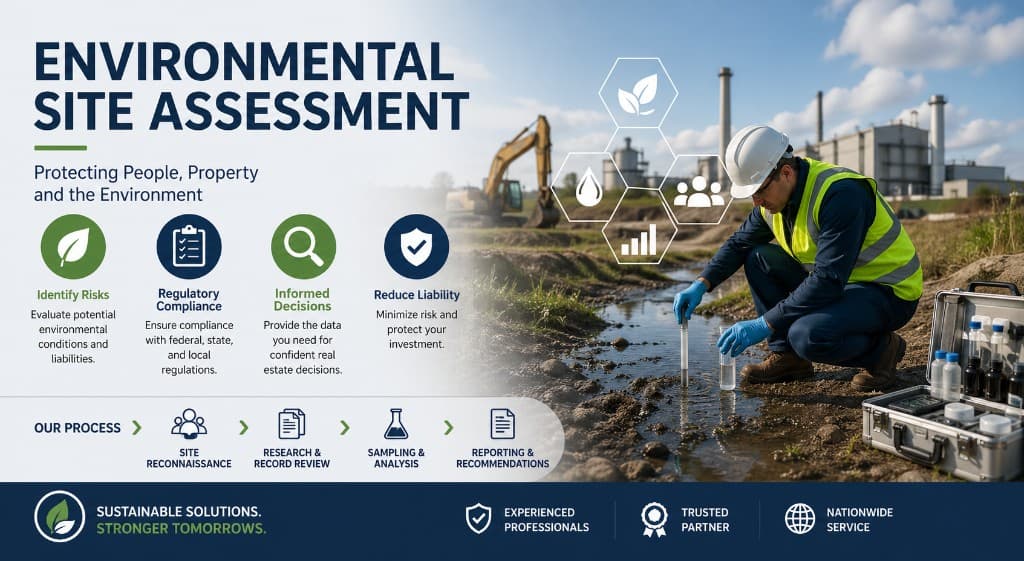
If you are buying, refinancing, or developing commercial real estate, you may be researching the cost of a Phase 1 Environmental Site Assessment (Phase 1 ESA). Start with our homepage FAQ on due diligence timelines and risk signals, then use this guide for budgeting and quote comparisons. In 2026, pricing can start around $1,850 for smaller, lower-risk properties, but actual costs vary based on several factors such as location, property size, historical land use, and project timeline.
Use our Phase I ESA Cost Calculator for state-level estimates by property type, acreage, and site history. For localized 2026 ranges, browse Phase 1 environmental site assessment cost by state—including California, Texas, Florida, and all 50 states. Compare Phase 2 ESA cost if Phase 1 identifies RECs.
Understanding what drives pricing helps buyers, lenders, and investors budget properly and avoid delays during due diligence.
What Is a Phase 1 Environmental Site Assessment?
A Phase 1 ESA is a standard environmental due diligence report often requested during:
- Commercial property purchases
- SBA and conventional lending
- Industrial acquisitions
- Land development projects
- Portfolio risk reviews
The purpose is to identify Recognized Environmental Conditions (RECs)—signs of potential contamination based on current use, historical records, surrounding properties, and site observations.
Most Phase 1 ESAs in the United States follow ASTM E1527-21, which is widely used in real estate transactions. See also REC vs HREC vs CREC definitions.
When Is a Phase 1 ESA Usually Required?
Requirements are deal-specific, but teams most often order a Phase 1 ESA aligned with ASTM E1527 during:
- Commercial acquisitions and dispositions
- Refinancing when a lender requests ASTM-aligned due diligence
- Major lease or redevelopment milestones that change long-term liability exposure
Always confirm expectations with your lender, legal counsel, and environmental consultant—checklists vary by financing program and state context.
Average Phase 1 ESA Cost in 2026
Typical pricing in the U.S. market may fall into the following ranges:
| Property Type | Estimated Cost Range |
|---|---|
| Small office / retail parcel | $1,850 - $2,500 |
| Standard commercial site | $2,500 - $4,000 |
| Industrial property | $3,500 - $6,500+ |
| Large multi-parcel / complex site | Custom Quote |
These are market estimates. Final pricing depends on site-specific risk and research complexity.
Main Factors That Affect Phase 1 ESA Pricing
1. Property Location
Location often has a major impact on cost.
Urban areas such as Dallas, Houston, Chicago, Los Angeles, or New York may require more extensive historical research due to decades of redevelopment, industrial transitions, and dense neighboring uses.
Rural properties may have simpler records, but remote access and travel time can increase field costs.
2. Property Size
Larger sites typically require:
- More site observations
- Larger map review areas
- Additional historical research
- More documentation
A small retail lot usually costs less than a 50-acre industrial tract.
3. Historical Land Use
Past uses can significantly affect pricing.
Examples of higher-risk former uses include:
- Gas stations
- Dry cleaners
- Auto repair facilities
- Manufacturing plants
- Agricultural chemical storage
- Warehouses with unknown tenants
The more complicated the history, the more time consultants need to investigate.
4. Turnaround Time
Standard delivery is often 7 to 14 business days, though timing depends on records access and site complexity.
Rush orders are commonly available, but expedited service usually increases cost.
5. Travel & Access
If the property is in a remote area, consultants may charge additional fees for:
- Mileage
- Lodging
- Extended travel time
- Difficult site access
Real Example: Why a Phase 1 ESA Matters
In one real-world scenario, a Phase 1 ESA identified evidence of a former underground storage tank. That finding led to a Phase 2 investigation involving soil and groundwater testing. After review, no significant impact was confirmed, the tank was removed, and the project moved forward.
This shows how a Phase 1 ESA can protect buyers by uncovering hidden environmental issues before closing.
How Long Does a Phase 1 ESA Take?
Most projects are completed within:
- 7-14 business days for standard properties
- Faster for simple sites with available records
- Longer for complex or multi-site transactions
If financing deadlines are tight, order early. See how long a Phase 1 ESA takes and our week-by-week timeline.
How to Find a Reliable Phase 1 ESA Consultant
When comparing providers, look for firms with experience in:
- Commercial real estate transactions
- ASTM Phase 1 ESA standards
- Local and state environmental regulations
- Urban and rural property types
- Fast lender-driven timelines
Ask whether the quote includes all fees or if travel, rush processing, and records charges are separate.
Can You Review a Sample Phase 1 ESA Report?
Yes. Many firms can provide a redacted sample report so buyers understand what to expect.
A typical report may include:
- Site description
- Historical aerials/maps
- Regulatory database review
- Photographs
- Findings
- REC conclusions
- Recommendations
Should You Choose the Cheapest Quote?
Not always.
A very low quote may exclude:
- Site visit quality
- Historical depth
- Fast turnaround
- Senior reviewer oversight
- Lender-specific formatting
For acquisitions, saving a few hundred dollars on due diligence can create much larger risks later.
Final Thoughts
A Phase 1 Environmental Site Assessment in 2026 may start around $1,850, but the real price depends on the property itself. Location, size, history, urgency, and access all matter.
For buyers, lenders, and investors, the real value of a Phase 1 ESA is not just the report cost-it is avoiding hidden liabilities before money changes hands.
Phase 1 ESA Cost FAQ
How much does a Phase 1 ESA cost?
In 2026, typical U.S. Phase 1 Environmental Site Assessment planning ranges start around $1,850 for small office or retail parcels and often fall between $2,500 and $4,000 for standard commercial sites. Industrial, multi-building, or high-risk histories can exceed $6,500 before travel or rush fees.
Who pays for a Phase 1 ESA?
The buyer or borrower usually pays during due diligence, unless the purchase agreement assigns environmental investigation to the seller. Refinance borrowers typically pay when the lender requires an updated ASTM E1527 report.
How long does a Phase 1 ESA take?
Standard commercial properties often finish in 7–14 business days after the consultant is engaged. Complex industrial sites, multi-building campuses, or slow records access can take three weeks or longer.
Can I skip a Phase 1 ESA?
Some low-risk deals or cash purchases may proceed without one—but financed acquisitions, SBA loans, and most institutional buyers require ASTM-aligned Phase 1 ESAs. Skipping due diligence can expose buyers to CERCLA liability and lender declinations.
What is included in Phase 1 ESA cost?
A standard ASTM E1527 Phase I ESA quote usually covers records review, site reconnaissance, interviews, and the report. Phase 2 subsurface testing, asbestos surveys, remediation, and agency fees are separate scopes.
Does Phase 1 ESA cost vary by state?
Yes. Consultant rates, travel, and records depth differ by market. California, New York, and other high-cost metros often run above Sun Belt baselines for the same property profile.